Two tomatoes, side by side, identical to the eye — same size, same red, same shine. One grew in soil that's been tilled and chemically fed for decades. The other grew in soil that's alive: dark, crumbling, full of a biology you can't see but can absolutely taste. They look the same on a supermarket shelf. They are not the same food.
Most people trying to eat better reach for the word "organic" as their guide. It's a reasonable instinct — but it's answering a narrower question than most people think.
What "Organic" Certifies
Organic certification governs which inputs a farm can use — no synthetic pesticides, no synthetic fertilizers, no GMO seed. That's a real and meaningful standard. What it doesn't directly measure is the thing that determines a food's nutritional density: whether the soil it grew in is biologically alive.
An organic farm can still till aggressively, grow the same crop repeatedly without rotation, and rely on approved-but-still-isolated nutrient inputs rather than a genuinely active soil ecosystem. It's better than conventional farming by a meaningful margin. It isn't automatically the same thing as living soil.
What Living Soil Is
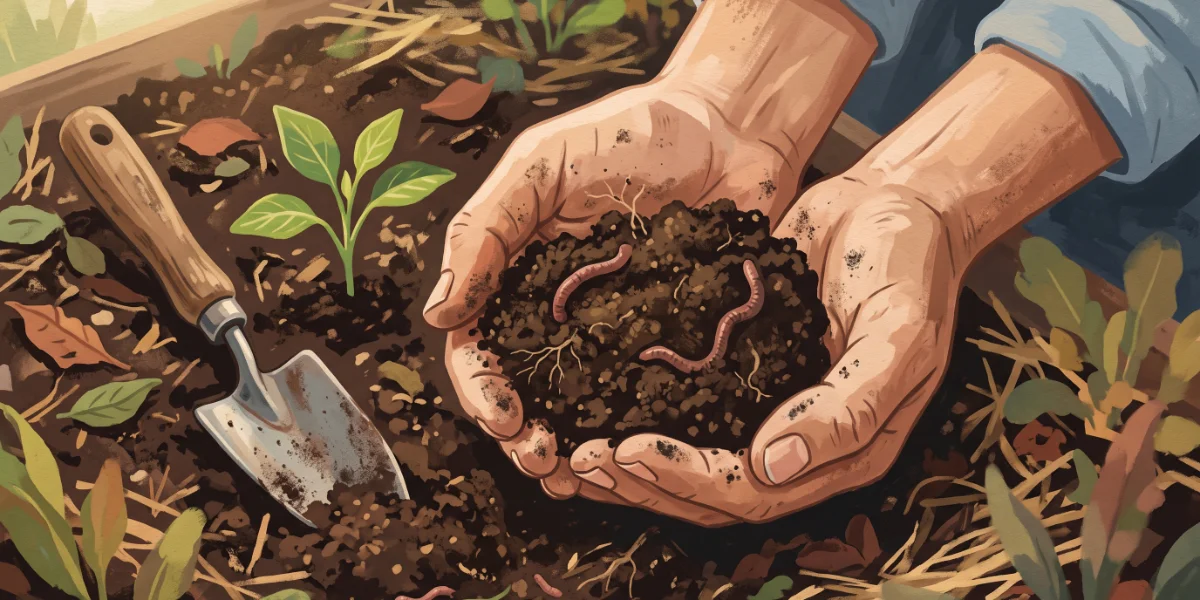
Healthy soil isn't an inert substrate holding a plant upright while nutrients get added to it. It's an extraordinarily complex ecosystem — billions of microorganisms per teaspoon, including bacteria, fungi, protozoa, and nematodes, interacting with each other and with plant roots in ways science is still mapping.
At the center of that web are mycorrhizal fungi — thread-like networks that form symbiotic relationships with the roots of most plant species on Earth. The plant photosynthesizes, converting sunlight into sugar, and sends a share of that sugar down through its roots to feed the fungal network. In exchange, the network — which can extend many meters beyond where any root could reach on its own — brings back water, phosphorus, nitrogen, and trace minerals the plant couldn't access alone. The network even connects separate plants to each other, allowing nutrient and chemical-signal transfer between them — researchers have nicknamed it the Wood Wide Web.
What Industrial Farming Does to It
Synthetic fertilizer delivers nutrients directly to the root, which makes the mycorrhizal relationship redundant — the plant stops "paying" for a service it's getting for free, and the fungal network atrophies. Pesticides and herbicides kill soil organisms indiscriminately, not just the target pest. Mechanical tillage physically shreds the fungal threads the network depends on.
The result is soil that can still technically grow food, because synthetic inputs replace what the destroyed biology used to provide — but the food itself measures lower in nutritional density, because the biological machinery that made minerals genuinely bioavailable is gone. Studies comparing the nutrient content of vegetables grown decades ago with those grown today have consistently found real reductions in iron, calcium, magnesium, and zinc content in conventionally grown produce. The food looks the same. The calories are similar. The biological richness isn't.
Food grown in living soil is also, quite literally, more flavorful — not nostalgia, but a direct expression of the phytochemicals a plant produces in response to genuine biological interaction with its soil, interaction that industrial growing conditions largely eliminate.
What to Do
1. Ask About Practices, Not Just Labels
At a farmers market or through a CSA, ask directly: do you till? Do you compost? Do you rotate crops? A grower who can answer confidently is a better signal than a certification sticker alone.
2. Look for "No-Till" or "Regenerative," Not Just "Organic"
These labels specifically address soil biology rather than just input restrictions, and they're becoming more available at farmers markets and some grocery chains.
3. Compost, Even in a Small Space
A countertop compost bin feeding a garden, a shared community compost drop-off, or even a small worm bin under a sink all put biology back into soil somewhere. You don't need land to participate in this — you need somewhere for the compost to go.
4. Grow Something, Even a Little
A few herbs in a pot with real compost-amended soil, rather than bagged potting mix alone, is enough to notice the difference in flavor firsthand. You don't need a homestead to start testing this for yourself.
5. Prioritize Freshness Over Distance
Nutrient density and flavor both degrade after harvest regardless of how a crop was grown. A fresh, local vegetable — even conventionally grown — often beats a well-traveled, shelf-stored "organic" one. Where you can, local and fresh is doing real work alongside how it was grown.
It Begins Underground
Food freedom begins underground, not on a grocery store label. Understanding what makes food nourishing — living soil, biological relationships, freshness — is a more useful form of sovereignty than memorizing which certification sticker to trust.
This Week
At your next farmers market visit, ask one grower directly how they manage their soil. The answer will tell you more than any label on the table.
This is one piece of the Food Freedom picture. The Sovereign Life walks through the fuller picture of what food sovereignty looks like, alongside the other six dimensions of a genuinely sovereign life.
If this was useful, share it with someone who assumes "organic" and "nutrient-dense" always mean the same thing.
A note about this blog post:
This post was researched and drafted with AI assistance, directed, reviewed, and edited by Cato B. Hagen. All claims are checked against real sources before publishing.