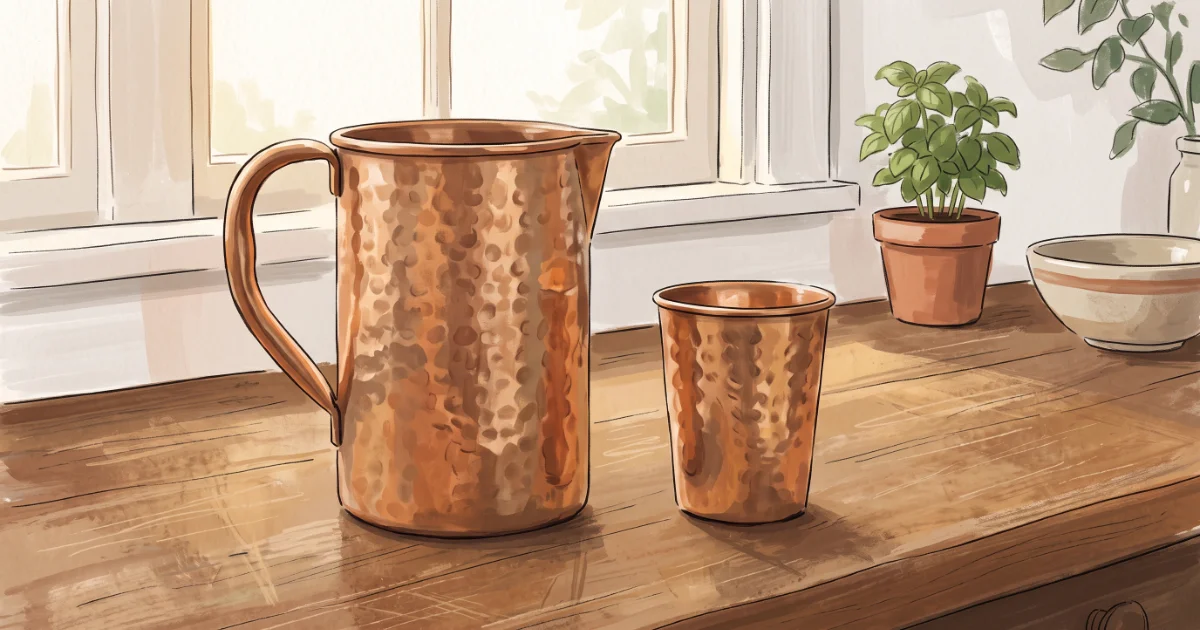
Can drinking from a copper cup cause copper poisoning — and does copper really do anything to the water first?
Copper genuinely kills a measurable range of waterborne bacteria through a well-documented mechanism, and typical overnight water storage leaches far less copper into that water than international safety guidelines allow. Real copper poisoning is possible, but the well-documented cases involve circumstances quite different from a healthy adult occasionally drinking from a well-made cup — acidic liquids left sitting for too long, water stored for days rather than overnight, or a rare genetic condition.
Both halves of that answer deserve the actual evidence behind them, separately, rather than one verdict standing in for both.
What's Well-Established: Copper Does Kill Bacteria
The mechanism has a name — the oligodynamic effect — and it isn't folklore. Copper ions released from the metal's surface interfere with bacterial cell respiration and DNA function, and the effect has been tested directly against real pathogens. In one study published in the Journal of Health, Population and Nutrition, drinking water spiked with 500 CFU/mL of diarrhea-causing bacteria — including Vibrio cholerae, Shigella, and strains of E. coli and Salmonella — was stored in copper pots for 16 hours at room temperature. No viable bacteria could be recovered afterward, even after attempts to resuscitate them in enrichment broth.
The same underlying chemistry is why the US Environmental Protection Agency approved copper alloys for public health antimicrobial-surface registration in 2008 — the first solid surface material ever granted that status. On a copper alloy surface, independent testing found that more than 99.9% of several dangerous bacteria, including MRSA and E. coli O157:H7, were killed within two hours at room temperature. That's a US regulatory registration specifically, but the chemistry it's built on isn't country-specific — it's the same ionic mechanism at work whether it's a hospital handrail or a water vessel.
Where the Evidence Ends and the Health Claims Begin
Storing water overnight in a copper vessel — sometimes called tamra jal — is a genuinely old Ayurvedic practice, and the tradition deserves to be described accurately rather than dismissed. The claimed benefits typically include better digestion, immune support, anti-inflammatory effects, and slower skin aging.
Copper is a real, essential trace mineral, and this part isn't in dispute: it's a required cofactor for enzymes including cytochrome c oxidase (cellular energy production), superoxide dismutase (antioxidant defense), and lysyl oxidase, which cross-links collagen and elastin — a genuine, well-established mechanistic link to skin and connective tissue health. What hasn't been established is whether the small amount of ionic copper picked up from a night in a copper cup is enough to meaningfully move any of those systems in a healthy, adequately-nourished adult. The mechanism is real; the specific claim that this particular practice produces these particular systemic effects hasn't been tested in controlled clinical trials. Plausible biochemistry and a proven practice are two different things, and it's worth holding both honestly rather than collapsing one into the other.
Is Copper Poisoning From a Cup Possible?
Real copper toxicity exists, and the actual numbers make it possible to answer this properly instead of guessing. The adult Recommended Dietary Allowance for copper is 900 micrograms a day, and typical dietary intake from food alone already runs 1.0–1.6 milligrams a day in most people — copper is common in food. The Tolerable Upper Intake Level for a healthy adult, the threshold set to protect against liver damage, is 10 milligrams a day. The World Health Organization's drinking-water guideline caps copper at 2 milligrams per liter.
Measured against a copper vessel: water left overnight typically picks up somewhere around 0.2 to 0.5 milligrams of copper per liter — comfortably under the WHO limit and a small fraction of the adult upper intake level. That number climbs the longer water sits, reaching roughly 0.8 milligrams per liter or more after several days of storage, and acidic liquids — lemon water, citrus, wine, anything with real acidity — leach copper far faster than plain water does. That's the actual, quantified reason behind two pieces of standard advice: refill a copper vessel daily rather than let water sit for days, and don't store or drink acidic beverages from unlined copper.
The most serious documented copper-toxicity cases are real but involve a different scenario entirely. Indian Childhood Cirrhosis is a well-documented liver disease in infants, traced to animal milk stored or boiled in copper and brass household vessels — milk picks up copper six to twenty times more readily than water does, at a scale that mattered specifically for infant livers. The disease has largely disappeared from the regions where it was studied once that specific feeding practice was identified and changed; it isn't a finding about adults drinking water from a copper cup. Separately, people with Wilson's disease or other genetic copper-metabolism disorders are genuinely at risk from excess copper at levels far below the general adult upper limit — that upper limit specifically doesn't apply to them, and anyone with a known copper-metabolism condition should get personal guidance from a doctor before using copper vessels regularly.
What to Check Before Buying a Copper Cup or Flask
- Solid copper, not copper-plated. A thin copper layer over brass or steel wears through with use, and the base metal underneath isn't the material any of the research above is about. Look for a stated purity, ideally 99% or better copper.
- No internal lacquer or wax coating. Many decorative copper pieces are coated specifically to stop tarnishing — which also means the water never touches the copper. A lacquered vessel does nothing described above regardless of how it's marketed; ask directly whether the interior is uncoated.
- How the seams are joined. Cheaper imported pieces sometimes use lead-based solder at handles or seams, which is a real contamination risk entirely separate from the copper itself. A reputable maker will state its joining method and confirm it's lead-free.
- Where it's made, stated plainly. A seller who names the purity, construction method, and origin specifically is a better sign than marketing language like "authentic Ayurvedic copper" with no actual specifics behind it.
How to Spot a Low-Quality One Quickly
- Run a magnet over it. Copper isn't magnetic. If a magnet grabs the body of the cup, there's very likely a steel core under a thin copper plating, not solid copper.
- A shine that never changes. Uncoated copper naturally tarnishes and develops a patina over weeks of use. A cup that stays perfectly shiny indefinitely without any polishing is a sign of a protective coating, not a sign of quality.
- Unusually light for its size. Thin plating over another metal often weighs noticeably less than a comparably sized piece of solid-gauge copper.
- No purity or construction information anywhere. If a listing can't say what percentage copper it is or how it's joined, that's the same red flag as an uncertified water filter making vague claims — nothing to check.
Where Tradition and Verification Meet
This is a genuinely good example of what sovereign thinking looks like applied to an old practice: not dismissing centuries of use as superstition, and not accepting every claimed benefit uncritically either. The antibacterial mechanism is real and independently tested. The broader health claims rest on real biochemistry but haven't been proven for this specific practice. Both of those can be true at once, and knowing which is which is the actual skill worth building — here and everywhere else this kind of traditional practice shows up across the seven pillars.
If you want the fuller seven-dimension picture this sits inside, The Sovereign Life covers traditional water practices like this one alongside the rest of the Water Freedom picture — worth exploring if you haven't yet.
A note about this blog post:
This post was researched and drafted with AI assistance, directed, reviewed, and edited by Cato B. Hagen. All claims are checked against real sources before publishing.