Do home water distillers remove everything bad from your water?
Distillation combines two purification steps most single-technology filters only manage one of: boiling, which reliably kills bacteria, viruses, and parasites, and vapor-only collection, which leaves virtually all dissolved minerals, heavy metals, and fluoride behind in the boiling chamber rather than in your glass. The one real exception is a specific category of volatile chemicals that boil at or below water's own boiling point and can travel over with the steam.
That's a genuinely different removal profile than reverse osmosis or a ceramic gravity filter, and worth understanding on its own terms rather than assuming it's just "filtering by boiling."
How Distillation Works (Two Steps in One)
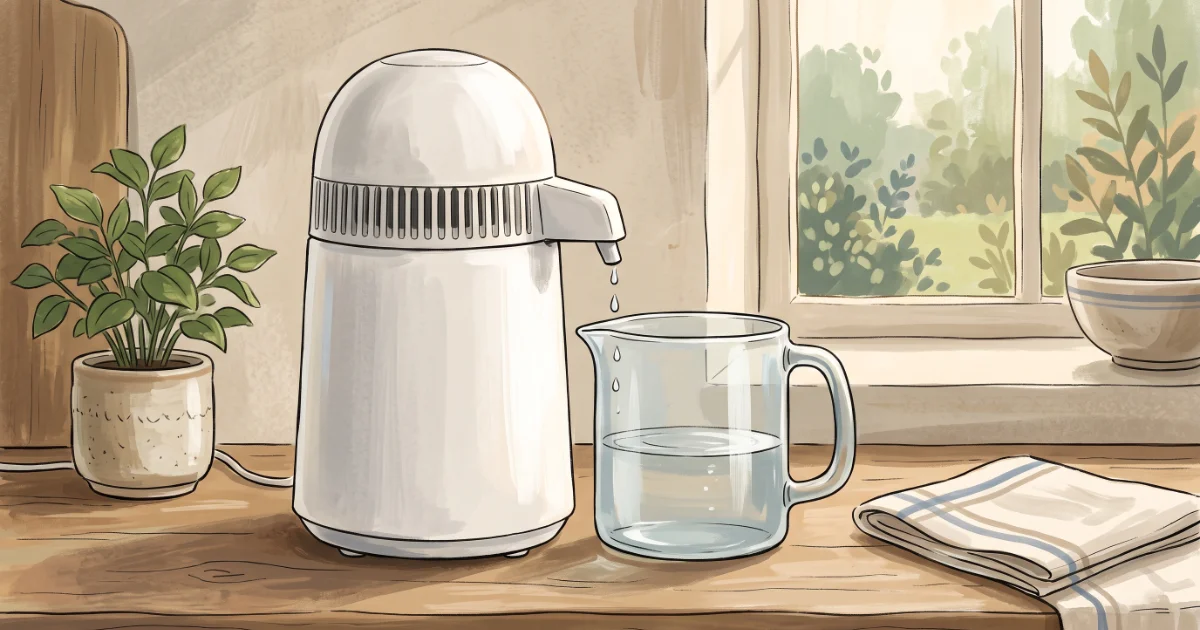
A home distiller heats water in a boiling chamber until it turns to steam, then routes that steam through a cooling section where it condenses back into liquid and collects in a separate container. Whatever doesn't vaporize along with the water — minerals, heavy metals, salts — stays behind in the boiling chamber as residue, which is exactly why these units need periodic descaling, the same way a kettle does in a hard-water area.
This is a meaningfully different action than simply boiling water in a pot. Boiling alone is one of the oldest, most reliable disinfection methods available — the World Health Organization and the CDC both recommend a full rolling boil for one minute (three minutes above roughly 2,000 meters elevation) as sufficient to kill bacteria, viruses, and protozoan cysts including Giardia and Cryptosporidium. But boiling a pot of water and drinking it back doesn't remove anything — every dissolved mineral and metal that was in the water is still in the water once it cools. Distillation adds the second half: only the vapor gets collected, so whatever doesn't evaporate gets physically left behind.
What It Removes
On fluoride specifically, distillation is the most complete household method available. Fluoride compounds have boiling points far above water's, so they stay in the boiling chamber rather than traveling with the steam — independent testing has measured removal rates exceeding 99%, compared to roughly 85–92% for a typical reverse osmosis membrane covered in an earlier post. The same logic applies to arsenic, heavy metals, nitrate, and dissolved solids generally: if it doesn't vaporize at or near water's boiling point, it doesn't make it into the distillate.
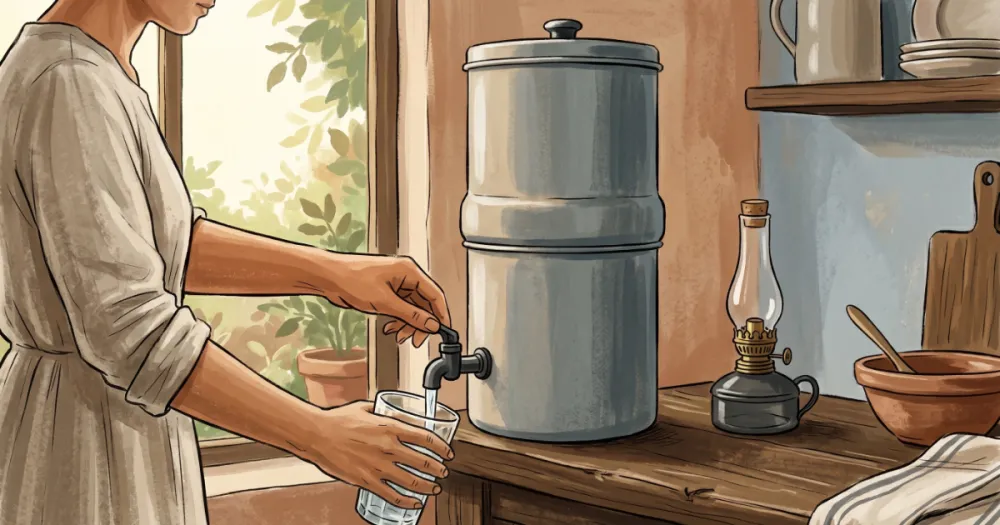
On the microbiological side, distillation is arguably the most complete method covered in this series so far. Because the process starts with a full boil, it reliably handles bacteria, viruses, and protozoan cysts together — the same pathogen categories the WHO/CDC boiling guidance covers. That's a genuine advantage over a ceramic gravity filter, which physically strains out bacteria and cysts but generally lets viruses pass through untouched.
The One Real Gap: Volatile Chemicals
Distillation has one well-documented weak point: certain solvents, pesticides, and volatile organic compounds — benzene and toluene are commonly cited examples — have boiling points close to or below water's own. That means they can vaporize right alongside the water and condense straight back into the distillate, essentially riding along instead of being left behind.
Manufacturers address this in a few different ways: a small activated carbon post-filter on the output spout, a gas vent that lets the more volatile compounds escape before they reach the condensing coil, or a fractional design that condenses VOCs separately from the water itself. When you're comparing distillers, this is the specific feature worth checking for by name, the same way checking for an NSF/ANSI standard matters with any other filter — a unit with no VOC mitigation at all is leaving a real, known gap uncovered.
The Real Tradeoffs
- It's slow, and it runs on electricity. A typical countertop unit processes somewhere around 4 liters over roughly an hour, at a few hundred watts — a 750 W unit distilling 4 liters an hour works out to roughly 0.19 kWh per liter, though wattage and rate vary meaningfully by model, so check the specific numbers rather than assuming.
- Distilled water has essentially no minerals at all. Distillation typically produces even lower total dissolved solids than reverse osmosis, which raises the same demineralization question covered in the RO post — most people get the bulk of their calcium and magnesium from food rather than water, but it's worth knowing if distilled water becomes your household's primary daily source for years, and some units offer a remineralization option for exactly this reason.
- The boiling chamber needs regular descaling. Mineral residue left behind is the whole point of the process, but it also means scale builds up in the chamber the same way it does in a kettle, and needs periodic cleaning to keep working efficiently.
- Voltage and plug standards vary by region. Home distillers are commonly built for either 110–120V (as in North America) or 220–240V mains (as in the UK, EU, and much of the rest of the world) — check the specification against your own outlet standard before ordering one from a different market, not just the plug shape.
What to Check Before Buying One
- A food-grade stainless steel boiling chamber, not a lower-grade metal, since this surface is in direct, repeated contact with boiling water.
- An actual VOC mitigation stage — a named carbon post-filter or vent design, not just a general "purifies your water" claim.
- The collection container material. Glass avoids any question of hot liquid contacting plastic; if it's plastic, look for an explicit BPA-free/food-grade rating rather than assuming it.
- Rated output matched to actual household need. A few liters an hour covers daily drinking and cooking water for most households; it isn't a whole-house solution the way a point-of-entry system would be.
An Old Process, Understood Rather Than Assumed
Distillation trades away the one advantage a gravity ceramic filter offers — no electricity, no dependency on the grid — in exchange for a genuinely more complete removal profile across dissolved minerals, heavy metals, and every pathogen category boiling kills. Neither is the universally "better" choice; they're different tools solving for different priorities, and knowing which tradeoff you're making, instead of assuming one method does everything, is the actual point.
This Week
Pull your water quality report or test your well water before choosing a purification method — fluoride, arsenic, heavy metals, or high TDS point toward distillation or reverse osmosis, while a bacterial or sediment concern alone might not need either. If distillation fits what you need, check specifically for a named VOC mitigation stage and confirm the voltage matches your own outlet standard before ordering.
If this was useful, share it with someone who assumed boiling water and distilling water were the same thing.
Free Guide: A Practical Guide to Home Water Filtering
Most people buy a water filter based on the product label and not based on their own water. This practical free guide shows you how to check the quality of your water and then understand how to choose the type of filter solution needed. 34 pages covering every major contaminant, all seven filter technologies, and how to verify any certification claim yourself.
Get It FreeA note about this blog post:
This post was researched and drafted with AI assistance, directed, reviewed, and edited by Cato B. Hagen. All claims are checked against real sources before publishing.