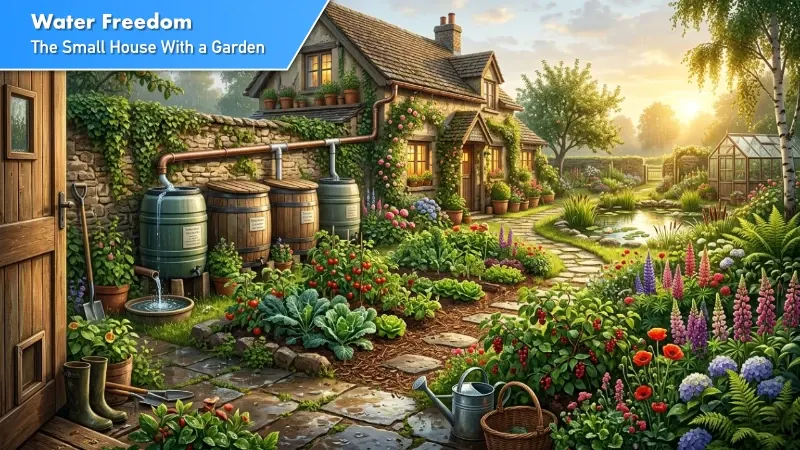
Scenario 2 — Water Freedom in a Small House With a Garden

Water Freedom in a Small House With a Garden
The Sovereign Life — A Vision Guide to Total Personal Freedom
* Author voice is under production and will soon be added
You step outside on a morning after heavy rain and the first thing you notice is that nothing has been wasted.
The roof of your house feeds a network of collection pipes that run to large storage tanks along the north wall of the garden. A thousand litres of capacity in total. You installed them over a single weekend two years ago, with help from a neighbour who'd done it the year before.
The tanks are covered, shaded, and connected in sequence so they fill in order. An overflow pipe from the last one feeds a small pond at the bottom of the garden: a living water feature that's become its own ecosystem. Frogs, dragonflies, and a self-sustaining population of small fish keep the mosquitoes in check without any intervention from you.
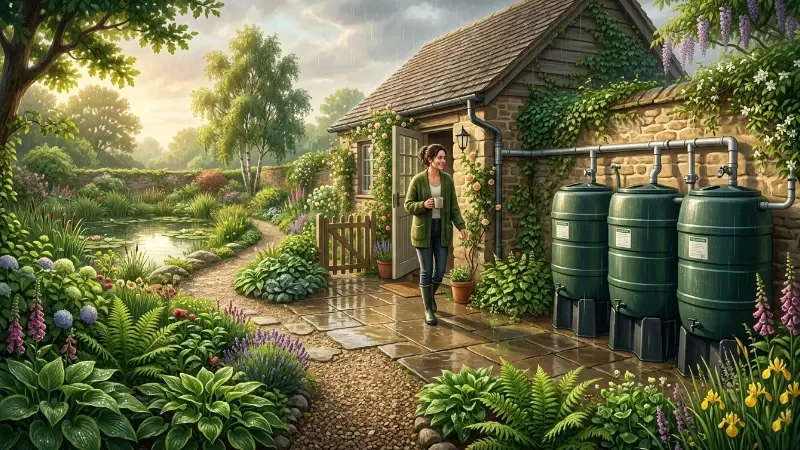
The rainwater from the tanks feeds your entire garden through a simple gravity-fed drip irrigation system. It never sees a treatment plant. It never picks up chlorine or fluoride or the residue of a thousand pharmaceutical compounds that have passed through the municipal system. It falls from the sky, lands on your roof, goes straight into your soil, carrying trace minerals and the natural vitality of rainfall. Your plants respond to it with a vigour that tap-fed gardens simply don't produce.
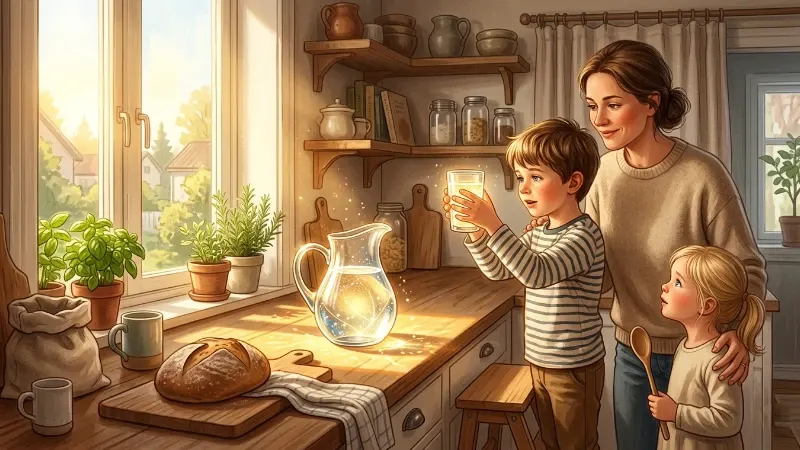
Your drinking water comes from a different system: a whole-house filtration and structuring unit installed where the mains supply enters the building. Every tap in your house runs structured living water. The shower water is filtered. The water you cook with is filtered. The water your children drink at the kitchen tap is the same quality as the water in your own dedicated drinking vessel: a hand-blown glass jug that sits on the counter, filled fresh each morning.
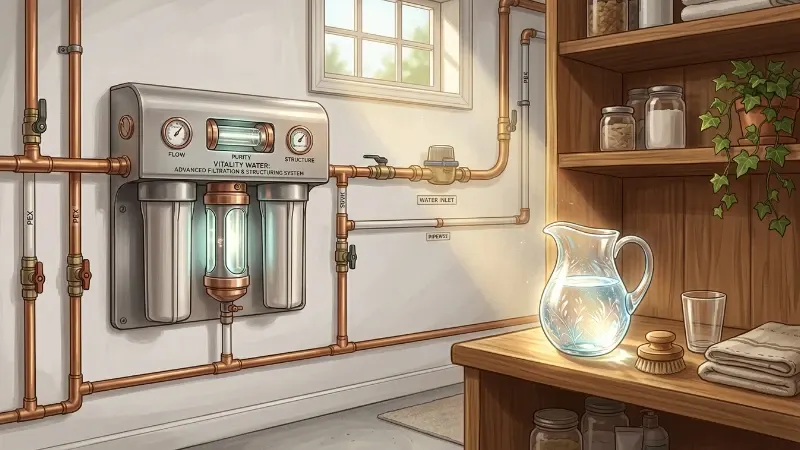
You understand what that jug of water carries. You've read the research. You've seen the crystalline images of structured water versus degraded water under a microscope.
You understand that water holds the energetic imprint of everything it has passed through: the pipes, the treatment chemicals, and the electromagnetic fields of the infrastructure it travels through. And you understand that the structuring process (the vortexing, the exposure to natural light, the passage through mineral stones) restores the water's natural coherence, returning it to something your cells recognise as native to them.
Your children understand this too, not as abstract science but as lived reality. They helped you build the rainwater system. They know which tank is fullest. They know why you fill the jug each morning and leave it in the light for an hour before drinking. They know that water is alive and that how you treat it determines what it does for you.
In your neighbourhood, the water culture has been slowly building for years. It started with three households comparing notes on home filtration systems. Now it's a loose but active network of twenty families across six streets, sharing knowledge, equipment, maintenance skills, and occasionally water itself during dry spells.
There's a shared atmospheric water harvester too, a larger unit that one family hosts in their garden, pulling moisture straight from the air on humid days and producing pure, mineral-balanced drinking water entirely independent of the mains. On dry summer weeks, when water restrictions kick in for garden use, the network shares from its collective stored rainwater instead of drawing from the municipal system.
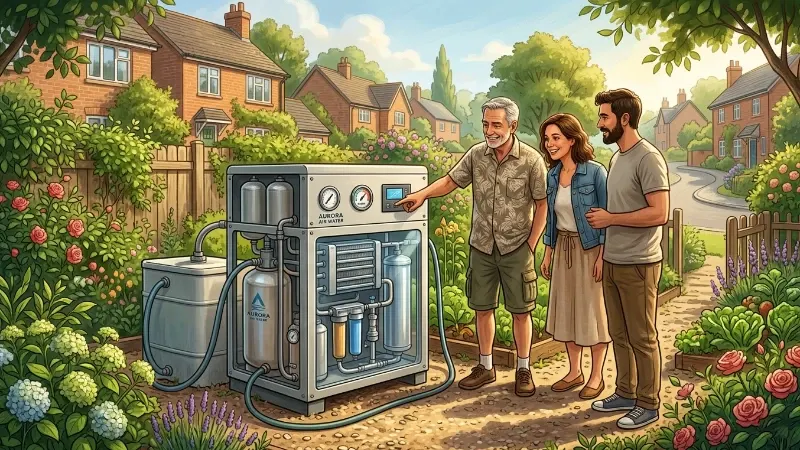
Last spring, the network mapped every natural water source within five kilometres: springs, streams, and known underground water courses. They submitted the map to the local council as a community resource document.
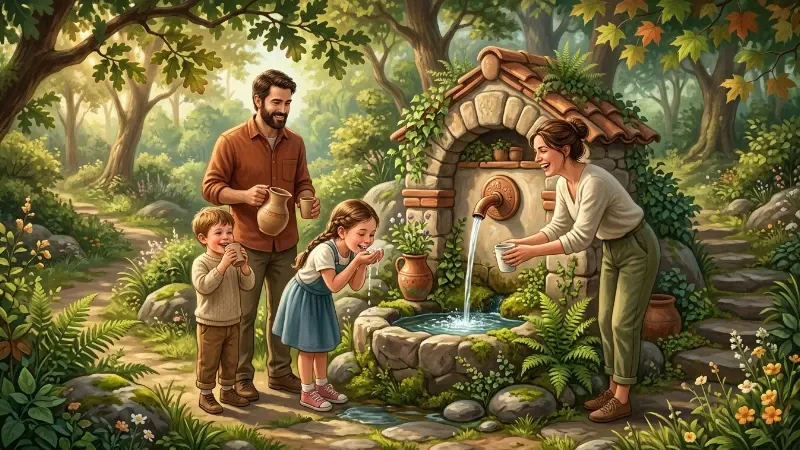
Two of the springs have since been tested, cleared, and opened as public drinking points with simple ceramic filter stations. Families visit them on weekend walks. Children drink from them and taste, for the first time, what water that's never seen a treatment plant actually tastes like.
In your house, water isn't a utility you pay for and forget. It's a living relationship. You tend it. You understand it. You are grateful for it. And it returns that care in the health and vitality of every living thing in your home, including you.
Real Tip
A simple rain barrel connected to a downspout diverter is the realistic starting point. Even one 200-litre barrel under a single downspout captures real water for the garden, no multi-tank system required. Add an inexpensive diverter kit so overflow still goes to normal drainage, and a gravity-fed soaker hose to water your beds without a pump.