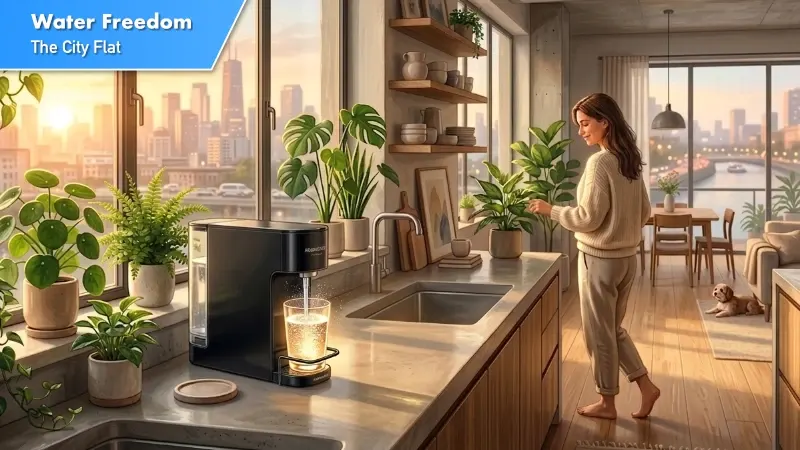
Scenario 1 — Water Freedom in a City Flat

Water Freedom in a City Flat
The Sovereign Life — A Vision Guide to Total Personal Freedom
* Author voice is under production and will soon be added
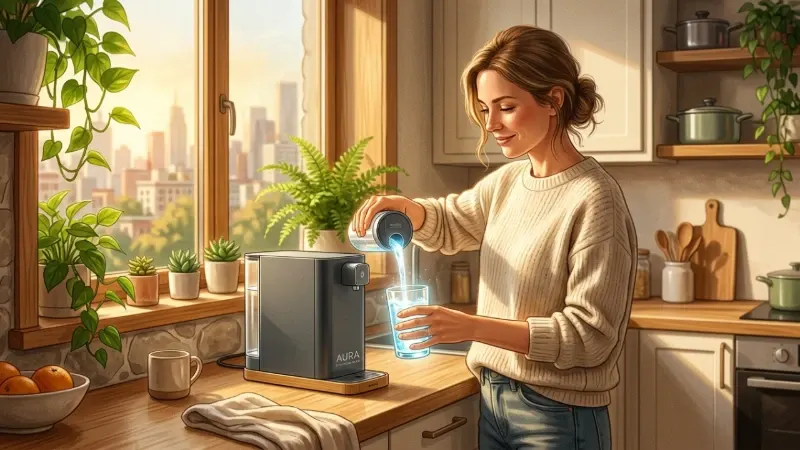
You wake in the morning and the first thing you do is pour a glass of water. Not from the tap, but from your home structured water system, sitting right there on the kitchen counter.
It's a compact unit, about the size of a large coffee maker that your building cooperative sourced and installed eighteen months ago. It pulls the municipal water through a multi-stage filtration process, removing chlorine, fluoride, heavy metals, pharmaceutical residues, and electromagnetic contamination. Then it passes the water through a vortex chamber that restructures the molecules into their natural, coherent fourth-phase state.
You drink it, and your body knows the difference. There's a softness to it, a vitality, that tap water never had. You've been drinking it long enough now that going back feels unthinkable.
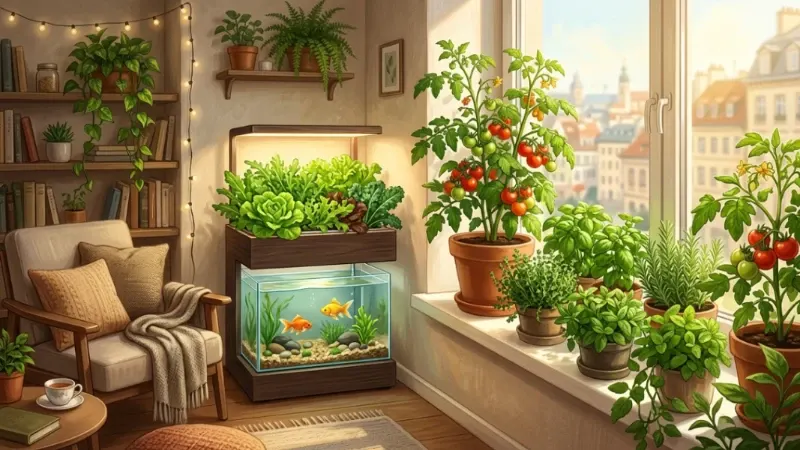
Your plants know the difference too. The tomatoes on your windowsill. The herbs along the south ledge. The small aquaponics unit in the corner of your living room that grows salad leaves and feeds a pair of small fish in a gentle closed loop. All of them respond to structured water with a vigour ordinary tap water never produced. The leaves are greener. The growth is faster. The food tastes more alive.
In your building, a twelve-storey block in the middle of the city, the water culture runs deeper than your flat. Two years ago the residents formed a water cooperative and installed a whole-building filtration and structuring system in the basement. The system is fed by the municipal supply but transformed before it reaches any tap. Every flat has living water now.
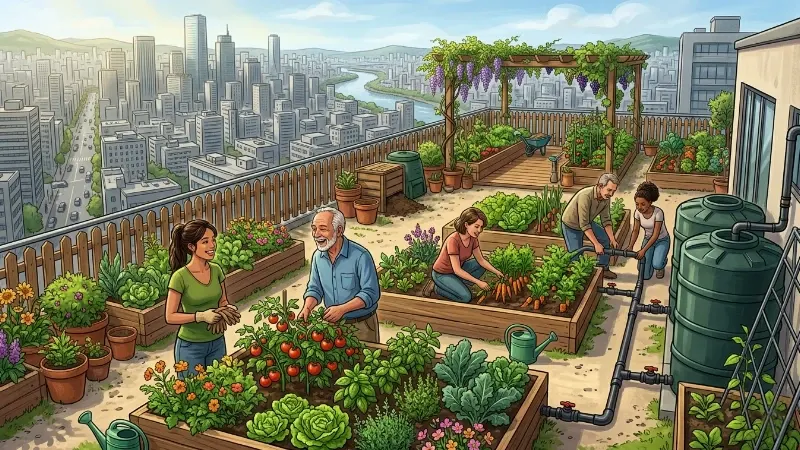
The community gardens on the second-floor terrace and the rooftop growing space run on something different: a separate rainwater harvesting system. Eight large collection tanks catch the roof drainage, filter it through biochar and gravel, then vortex it before it ever reaches the garden beds.
The rooftop garden feeds forty percent of the building's residents through the growing season. That water fell from the sky, and it was tended by the people who eat from it. Nothing about that is taken for granted.
There's a water education board in the building lobby, maintained by whoever feels moved to update it. It carries information about water structuring, the work of researchers who have studied water memory and crystalline structure, local rainfall data, and the results of the building's own water quality tests.
Children here grow up knowing what a water molecule looks like in its coherent state versus its degraded state. They grow up understanding that water responds to sound, to light, to intention, to love.
This isn't mysticism in this world. It's basic literacy.
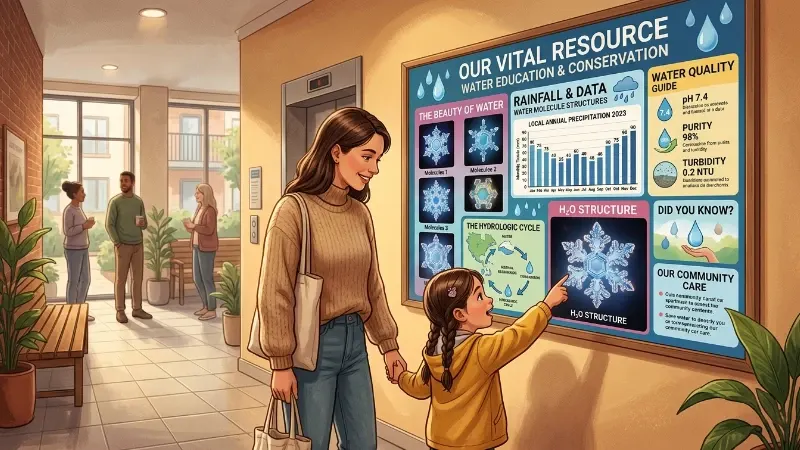
On the first Sunday of every month, the water cooperative meets in the common room. They review the system, discuss any maintenance, and share what they've been learning. Last month, someone brought a session on researchers studying the electrical properties of structured water. The month before that, two residents who'd visited a natural spring outside the city brought back samples. The water was tested, compared, and discussed.

In your flat, in your building, in your city, water is understood for what it truly is. Not a utility. Not a commodity. The living intelligence that makes all of life possible. You treat it accordingly. And it takes care of you in return.
Real Tip
You don't need a building-wide cooperative to start moving toward this. A multi-stage countertop filter, one that actually targets chlorine, chloramine, fluoride, and heavy metals rather than just a basic carbon pitcher, sits on your kitchen counter with no installation and connects to your existing tap with a simple diverter. Pair it with a simple glass vortex pitcher: fill it, give it a spin, and let it rest in natural light for twenty minutes before drinking. Together, the two cost a small fraction of a whole-building system, and they get your very next glass of water measurably closer to the one in this scenario.