The Difference Between Using AI Tools and Understanding Them
We live in an age of incredible tools. If you want to build a website, there are platforms that let you drag and drop until it's finished. If you want to write a piece of code, there are AI assistants that can generate it for you in seconds. If you want a chatbot, you can sign up for a service and have one running in five minutes.
This is amazing. It democratizes technology and allows people to create things that were once only possible for large teams of experts. But there's a danger in relying entirely on tools you don't understand. There's a fundamental difference between someone who uses a tool and someone who understands it.
The Illusion of Competence
When you use a powerful tool like an AI coding assistant, it's easy to feel like you've mastered the skill. You type a prompt, the code appears, you paste it into your editor, and it works. You feel like a programmer. But you haven't actually learned to program — you've learned to use a generator.
This works fine as long as everything goes perfectly. But the moment something goes wrong, the illusion of competence vanishes. When the generated code has a bug, you don't know where to look. When a client asks for a specific modification that the tool doesn't support, you're stuck. When the tool's interface changes or the service goes down, you're helpless.
The Power of Understanding
When you understand the fundamentals — when you've built something from scratch, line by line — your relationship with tools changes. You stop being a passive user and start being an active controller.
Imagine two people using a chatbot platform to build a support bot for their business.
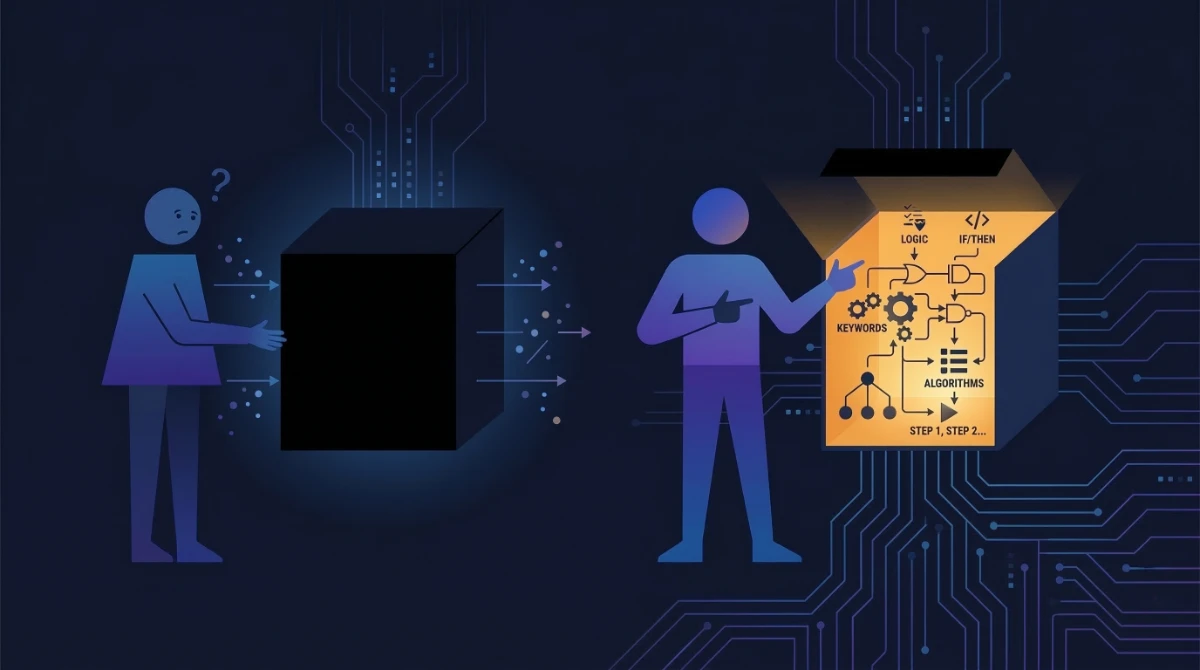
Person A has never written any code. They follow the platform's tutorial, set up some basic workflows, and get the bot running. For them, the platform is a black box. If it does something unexpected, they have no idea why. They are entirely dependent on the platform's features and its customer support.
Person B also uses the platform. But they have also built a simple chatbot from scratch. They understand how keyword matching works. They understand what a fallback is and why it matters. They understand the difference between a rule-based response and a generated one. When the AI gives a strange answer, they have a hypothesis about why. When a customer asks something the bot handles badly, they can usually identify the issue and either fix it in the platform's settings or route it differently. When the platform changes, they have options.
Same tool. Very different relationship with it. Person B is not a software engineer. They did not spend months studying computer science. They spent a weekend building something small and understanding how it worked. That weekend is the difference.
The Confidence of Knowing
The most important benefit of understanding the fundamentals isn't a technical one — it's psychological. It's confidence. When you know how the pieces fit together, technology stops being intimidating. You stop worrying about "what if I break it" because you know how to fix it. You stop feeling like you're just getting by and start feeling like you're in command.
In a world where new AI tools are appearing faster than anyone can keep up with, that confidence is one of the most valuable things you can have.
You do not have to choose between using tools and understanding them
This is not an argument against no-code platforms, AI assistants, or any of the tools that make complex things more accessible. Use them. They are genuinely useful.
But spend some time — even just a weekend — understanding what is underneath. Build something small. See how the pieces fit together. Understand what a rule is, what a fallback is, what a conversation loop is.
You will use the tools better. You will trust them more appropriately. You will know when to rely on them and when to work around them. And when someone asks you how any of it works, you will have an answer.
That is a small investment for a surprisingly large return.
Recommended Course
Build a fully working Python chatbot from scratch — complete with a web interface that runs in any browser. No experience needed. Every concept is explained in plain English, every step is covered in detail, and every lesson ends with something you can test immediately.
View Course Details