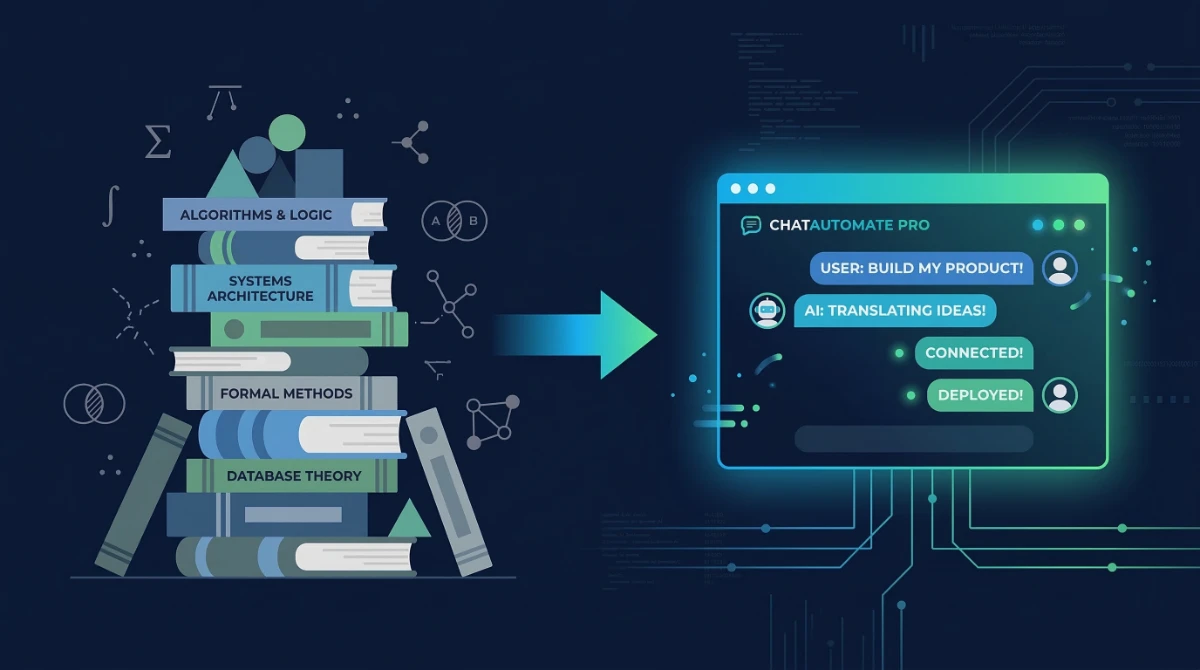
Why Every Beginner Should Build Something Before Learning Theory
If you've ever tried to learn a new skill — whether it's playing the guitar, learning a language, or writing code — you've probably encountered the "Theory Trap". This is the stage where you spend days, weeks, or even months reading books, watching tutorials, and memorising rules, but never actually doing the thing you're trying to learn.
In coding, the Theory Trap is particularly dangerous. It's easy to feel productive while watching a 10-hour course on Python syntax. You're learning, right? But then you sit down at your computer, open a blank file, and... nothing. You have no idea where to start. The theory is all there in your head, but the connection between that theory and a working program is missing.
The solution is simple, though it often feels counter-intuitive to beginners: Build something before you learn the theory.
The Project-First Mindset
When you start with a project, everything changes. You're no longer learning "how to use a for-loop" as an abstract concept. You're learning "how to repeat this message until the user says stop." You're not learning "what a list is" — you're learning "where to store my chatbot's possible replies."
This approach — often called Project-Based Learning — is more effective for three main reasons:
- Context is king: When you learn a concept in order to solve a specific problem, your brain has a hook to hang that information on. You're far more likely to remember it because you know exactly what it's for.
- Momentum matters: Nothing kills motivation faster than weeks of abstract exercises. Nothing builds motivation faster than seeing something you wrote actually work. A small win today is more valuable than a big win six months from now.
- You learn how to learn: Real-world coding isn't about knowing everything. It's about knowing how to figure out the piece you're missing. When you build a project, you encounter real problems, and you learn how to use documentation, search engines, and AI tools to solve them. That is the most important skill any coder can have.
Avoid the "Tutorial Hell"
The counterpart to the Theory Trap is Tutorial Hell — the cycle of following along with a video, copying exactly what the instructor does, and feeling like you've mastered the material. But just as watching someone play the piano doesn't teach you to play, watching someone code doesn't teach you to code.
To truly learn, you need to break things. You need to change the code, see it fail, figure out why, and fix it. You need to take the instructions and stray from the path. This is why our course gives you the code, explains how it works, and then encourages you to build on it yourself.
Start with something you actually want to exist
The best first project is one you would genuinely use or show to someone. Not a calculator. Not a number guessing game. Something with a bit of personality — something that feels like yours.
A chatbot is a good example. It has a name. It has a voice. It responds to you. You can customise it, extend it, and eventually put it in a browser so anyone can use it. It is small enough to finish in a weekend and interesting enough to keep you engaged through every step.
More importantly, when you are done, you have something that demonstrates real skills. Python. Web servers. HTML and CSS. A rule-based system that you designed and built. That is not nothing. That is a foundation.
And foundations, once you have one, are surprisingly easy to build on.
Recommended Course
Build a fully working Python chatbot from scratch — complete with a web interface that runs in any browser. No experience needed. Every concept is explained in plain English, every step is covered in detail, and every lesson ends with something you can test immediately.
View Course Details